Why “Time Bomb” by Rancid Still Hits Hard
For many listeners, the meaning of Time Bomb Rancid comes down to one sharp contrast: the song sounds like a party, but its story is bleak. Released as the second single from ...And Out Come the Wolves in 1995, the track runs only 2:24, yet it packs in a whole life cycle of risk, punishment, and violent fate. It became one of Rancid’s breakthrough songs, helping push the band from punk-scene favorites toward mainstream recognition.
"Time Bomb" - Rancid
It's just the ability to reason that wears so thin
Living and dying and the stories that are true
Loading lyrics...
Unable to load lyrics
We're unable to display the lyrics at this time. Please try again later.
Factually, the song was written by Tim Armstrong, Lars Frederiksen, and Matt Freeman, and produced by Jerry Finn with Rancid. It was released on Epitaph and reached No. 8 on Billboard’s Modern Rock Tracks chart, according to widely cited reference sources. Just as important, its sound drew on the ska-punk and reggae energy tied to Armstrong and Freeman’s earlier band, Operation Ivy.
A Fast Story About a Life Heading for Disaster
At its core, “Time Bomb” follows a young man whose life seems trapped in a cycle. He is introduced through style and attitude, then placed inside a harsher reality of confinement, hustling, and deadly street politics. The chorus does not just describe him; it predicts him.
That is why the hook matters so much. When Rancid repeats the boy’s a time bomb
, they turn the character into a warning sign. He is not just dangerous to others. He is also someone carrying his own collapse inside him.
Interpretation: The song suggests that identity can become a trap. Once someone is known as unstable, criminal, or untouchable, the world starts treating their downfall like a countdown already in motion.
Watch the official Time Bomb
music video
How the Lyrics Build the Character
One reason the song is so memorable is its economy. In a few lines, Rancid sketches the boy’s image, his past, and his fate. The famous detail list — black coat, white shoes
and black hat, Cadillac
— makes him feel cinematic. He is dressed like a legend before the song reveals how fragile that legend is.
Then the verses move into survival mode. The line about being back in the hole
pushes the story into confinement, while the reference to a youth home suggests that his hardening started early. The song’s worldview is brutal: one of the first lessons he learns is that nobody is going to save him.
Later, the action speeds up again. He is out, moving, chasing money, and getting deeper into trouble. By the time the song reaches the ending, violence feels less like a twist and more like the final step in a chain already set.
Three shots rung out
the hero’s dead
the new king is crowned
That short closing passage matters because it shows how quickly one street legend gets replaced by another. In this world, death is not treated as a sacred ending. It is treated as succession.
The Chorus Turns Style Into Tragedy
The chorus is catchy enough to sound almost celebratory on first listen. But the repetition works like a siren. Every time the band returns to the hook, they make the boy’s image feel more fixed and less human.
Interpretation: The song may be critiquing how street culture glamorizes danger. The clothes, the car, and the swagger all sound cool. But Rancid keeps tying those symbols back to mortality, showing how easily style can hide fear, grief, and doom.
There is also a family shadow in the final verse. The mention of his mother crying adds emotional cost. Until that moment, the song moves with hard-boiled distance. Then it briefly reveals the pain surrounding him, not just inside him.
Why the Sound Changes the Meaning
Part of the meaning of Time Bomb Rancid comes from the music itself. The track uses a bouncing ska-punk rhythm, bright momentum, and a memorable organ part. Song reference sources note that Paul Jackson of The Uptones played the Hammond organ solo, which helps give the song its sharp, swinging lift.
That upbeat arrangement creates what critics often call lyrical dissonance: cheerful sound, grim content. It is one of the song’s smartest choices. If Rancid had played the story straight as a slow lament, it might have felt ordinary. Instead, they make tragedy move like a street parade.
This also fits the band’s style in the mid-1990s. ...And Out Come the Wolves blended punk aggression with ska, reggae, and singalong hooks, and “Time Bomb” is one of the clearest examples of that crossover formula.
Context, Legacy, and a Careful Note on Real-Life Links
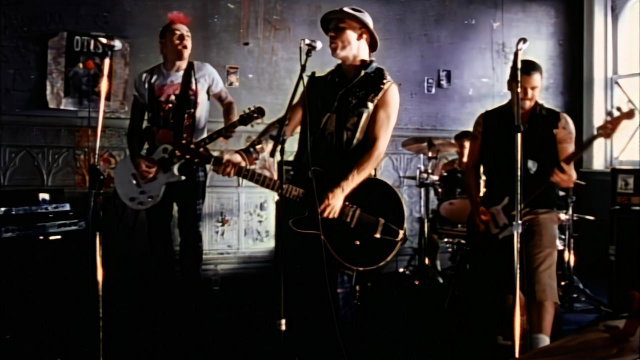
“Time Bomb” mattered beyond the album. Along with songs like “Ruby Soho,” it helped broaden Rancid’s audience during a moment when punk was reaching more radio and MTV listeners. The song’s video, directed by Marcus Raboy, added to that reach with imagery of urban decay and criminal motion.
Some secondary sources claim the story connects to a real person from the band’s wider circle. That claim appears in fan and reference spaces, but the sourcing is uneven. Without a strong primary interview on record, it is safer to say the song functions clearly as a narrative about a young man destroyed by the world he moves through.
The Lasting Takeaway
The reason “Time Bomb” lasts is simple: it never lectures, yet it says a lot. It tells a compact story about youth, image, crime, and fatalism, then delivers it through one of Rancid’s most infectious grooves.
For listeners asking about the meaning of Time Bomb Rancid, the answer is that the song turns a cool-looking outlaw tale into a tragedy about inevitability. It sounds alive, but it is really about a fuse burning down.
Disclaimer: This interpretation separates documented facts about the song’s release and production from critical reading of its lyrics. Meanings can vary by listener.








