Why Santana's 'Everybody's Everything' Still Lifts
Santana's "Everybody's Everything" sounds bright, busy, and instantly communal. On the surface, it is a dance-rock invitation. Under that surface, the meaning of Everybody's Everything Santana points toward something bigger: a call to loosen fear, share joy, and treat music as a social force.
"Everybody's Everything" - Santana
For the new change
Come around, come around
Loading lyrics...
Unable to load lyrics
We're unable to display the lyrics at this time. Please try again later.
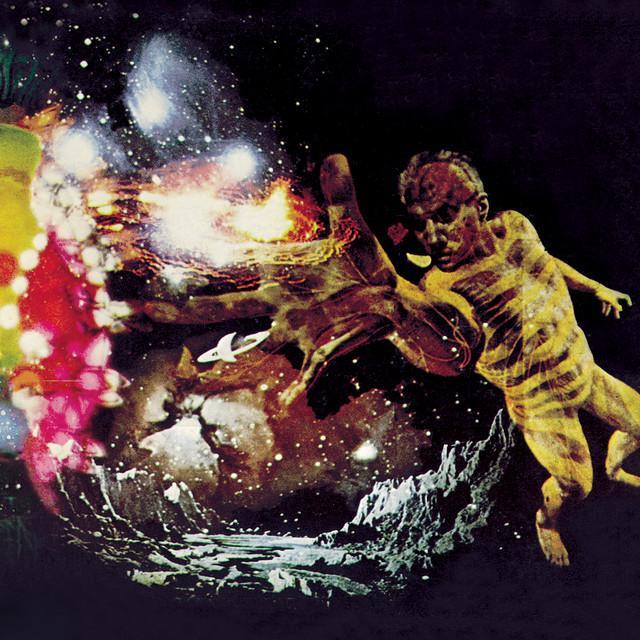
Released in 1971 on Santana III, the song came from a band that was already known for blending rock, Latin rhythms, jazz energy, and spiritual feeling. Written by Carlos Santana, Milton Brown, and Tyrone Moss, it carries that mix into a message about openness. The words are simple, but the simplicity is part of the point. They are less interested in telling a detailed story than in pulling people into a shared state of motion.
A Song About Change You Can Feel
At the center of the song is a crowd waiting for transformation. The opening image of people waiting for a "new change" suggests social hope, personal renewal, or both. Instead of sounding anxious, the song turns that waiting into momentum. Repeated phrases create the sense that change is already approaching through rhythm, gathering, and release.
Interpretation: the song treats music as a doorway into freedom. When the lyric urges listeners to let your head be free
, it is not only about dancing. It suggests dropping mental weight, social pressure, and emotional stiffness. The song frames liberation as something natural, not forced.
That idea continues when it says to turn the wisdom key
. The image is simple but effective. Wisdom is not presented as abstract knowledge; it is something they can unlock through experience, openness, and connection with others.
Watch the official Everybody's Everything
music video
The Voice Speaks to Everyone at Once
Unlike many rock songs that focus on one romance or one narrator's pain, this lyric keeps widening its audience. It talks to "brothers everywhere" and repeatedly calls on everyone to join in. That broad language helps explain why the song feels less like a confession and more like a communal chant.
There is a brief personal touch in hold me baby
, but even that line does not pull the song into a private love story for long. It quickly swings back outward. The result is a voice that feels public, warm, and inclusive.
How the Message Moves
The song's emotional logic unfolds in a few clear steps:
- People are waiting for something new.
- The answer is not silence but movement.
- Burdens should be set down and shared.
- Freedom comes through rhythm, togetherness, and release.
When the lyric says lay it down
, it offers the clearest command in the song. They hear an instruction to put down pain, stress, or social baggage. That makes the song's optimism feel active rather than naïve.
The Chorus Turns Hope Into Action
The hook does not argue a philosophy in complex terms. It pushes the body first. Phrases like get ready
and repeated calls to get down turn thought into action. In other words, the chorus says that understanding is not enough by itself. They have to move, participate, and join the sound.
Time for you to all get down
Spinnin' round and round
This short refrain captures the song's method. It invites surrender, but not passivity. The spinning image suggests release, joy, and even a mild loss of ego. They stop standing apart and become part of the circle.
Symbols Hidden in Plain Sight
The imagery in the song is not dense, but it is consistent. Several motifs keep returning:
- Circles and spinning: unity, continuity, and emotional release.
- Keys and wisdom: inner freedom that can be unlocked.
- Sharing: a world where understanding belongs to everyone.
- Sound and dancing: music as a tool for healing.
One unusual phrase compares someone to a "childless hometown." Interpretation: that image may suggest emptiness, loneliness, or a place that has lost its future. If so, the song is trying to answer that emptiness with warmth and collective energy. It is one of the few moments where the lyric hints at sadness beneath the celebration.
Why the Music Matters So Much
A big part of the meaning of Everybody's Everything Santana comes from the arrangement, not just the words. Santana's records from this era are known for layered percussion, driving bass, bright horns, and Carlos Santana's singing guitar tone. On the album page, that broader style is easy to place within the band's early sound.
Here, the groove keeps the message from becoming preachy. The beat is restless and forward-moving. The horns add urgency and festivity at the same time. The band sounds like a crowd becoming larger by the second, which matches the lyric's push toward inclusion.
Interpretation: the music itself performs the song's thesis. It blends many textures into one pulse, making togetherness audible.
A Few Plausible Readings
There is more than one way to hear the song:
Reading One: A social anthem
The references to a coming change and to everyone sharing can sound like a community-minded statement shaped by the early 1970s. In this reading, the song imagines liberation as collective.
Reading Two: A spiritual release song
Carlos Santana's work often reaches toward transcendence. In this reading, dancing becomes a path to higher awareness, and "wisdom" points inward.
Reading Three: A pure feel-good command
Sometimes the simplest answer works. The song may mainly want people to dance, smile, and stop overthinking. Even then, that emotional release is meaningful.
Why It Endures
What keeps the song alive is its lack of cynicism. It believes people can drop their burdens, meet one another in rhythm, and feel renewed for a few minutes. That belief, carried by Santana's groove-heavy performance, makes the track more than a party song.
For many listeners, the meaning of Everybody's Everything Santana is this: freedom is not just an idea. It is something they can hear, share, and step into together.
Disclaimer: This interpretation is based on the lyrics, recording context, and Santana's broader style. As with any song, different listeners may hear different meanings.







