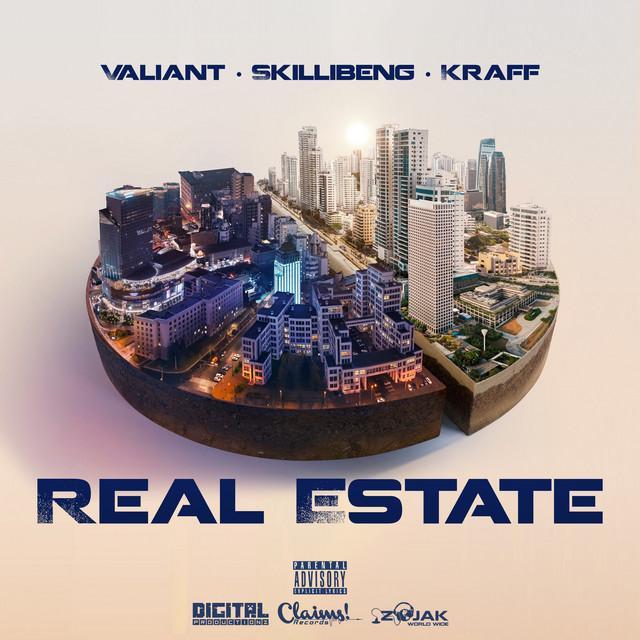
Why “Real Estate” Turns Wealth Into Survival
The meaning of Real Estate Skillibeng, Valiant, Kraff Gad starts with bragging, but it does not end there. Beneath the flexes, the song treats property as safety, status, and proof that struggle can be turned into something permanent.
"Real Estate" - Skillibeng, Valiant, Kraff Gad
Provided by LyricFindHi, this is Becky from Global Real Estate
Everything has been finalized
And you can pick up the keys to the property at tenLoading...Loading lyrics...
Unable to load lyrics
We're unable to display the lyrics at this time. Please try again later.
More Than a Flex Track
On the surface, “Real Estate” is a dancehall anthem about getting rich. The hook keeps returning to land, houses, and rising value. They present wealth not as random spending, but as smart ownership. When they say real estate
and interest rate
, they turn business language into street triumph.
That matters because the song is not mainly about luxury for luxury’s sake. It keeps linking money to protection, family, and long-term power. A plane, cars, and flashy living appear in the verses, but the core image is land. Land cannot be worn once and forgotten. It stays.
The Song’s Central Idea: Ownership Means Control
The clearest message is that owning property equals freedom. They describe buying houses, putting assets in their own names, and filling up acres. In plain terms, they are saying that real success is not just cash in hand. It is turning income into something stable.
That is why one of the most telling lines is put inna mi name
. The phrase is short, but the idea is big. Ownership means no middleman, no borrowed image, and no question about who has the power.
Interpretation: The song frames property as a response to instability. Instead of living at the mercy of lenders, landlords, or trends, they want assets that protect them. The lyric about being guarded from debt pressure makes that point directly.
From Poverty to Property
One of the strongest parts of the song is how often it hints at where they came from. They do not present wealth as normal. They present it as earned after hardship. Near the end, they admit they grow poor
and learned to save. That one detail shifts the whole tone.
Without that background, “Real Estate” could sound like simple chest-thumping. With it, the track becomes a story of transformation. They are not only showing what they have. They are showing what they escaped.
we grow poor, we love save
Block and cement
start the farming
This short run of lines suggests a path: humble beginnings, practical building, then expansion. The farming image is especially important. It adds another layer to the property theme. Land is not just a trophy. It can feed, produce, and grow value over time.
How Each Artist Adds a Piece
Skillibeng, Valiant, and Kraff Gad each push the same theme in slightly different ways. Skillibeng leans into sharp, high-end imagery: banks, credit, keyrings, and expensive vehicles. His writing makes success sound fast, technical, and global.
Valiant brings a tougher edge. His verse ties wealth to risk, self-defense, and discipline. Even while talking big, they suggest that money attracts pressure. The hard tone says success has to be protected.
Kraff Gad helps widen the picture from flashy gain to construction and scale. The lines about architects, living rooms, pools, and avenues make the dream physical. They are not just imagining money. They are imagining structures, blueprints, and neighborhoods.
Why the Chorus Hits So Hard
The chorus works because it is simple and repetitive. Every return to land and growth reinforces the same lesson: wealth should multiply. The phrase full up a acres
turns accumulation into a visual. Listeners can picture space spreading outward.
That repetition also gives the song a chant-like quality. In dancehall, hooks often work by making a central claim feel undeniable. Here, the repeated business terms sound almost like affirmations. They are not asking for success. They are declaring it.
The Production Sells the Dream
The beat, tagged as a Digital Production, helps explain the song’s meaning. It sounds sleek, hard, and modern, with enough bounce for the club but enough space for the words to land. That matters because “Real Estate” is driven by language: money terms, place names, brands, and status symbols.
The opening voicemail-style skit is especially smart. It sounds like a property handover, which sets the song in motion before anyone even starts rapping. That intro makes the dream feel real and bureaucratic at the same time. This is not fantasy alone; papers have been signed, keys are ready, and the deal is done.
Context Matters in Dancehall
In Jamaican music, songs about money and rise-up stories often carry social meaning beyond bragging. Skillibeng has become one of dancehall’s major crossover figures, with broad international attention noted by outlets like Rolling Stone. Valiant has also been part of the genre’s newer wave, especially around his 4:14 era.
That context matters for the meaning of Real Estate Skillibeng, Valiant, Kraff Gad. When artists from that scene talk about land, banks, and ownership, they are not only listing purchases. They are entering a longer tradition of measuring success by what cannot easily be taken away.
A Deeper Reading of the Song
Interpretation: “Real Estate” can also be heard as a song about respect. Property stands in for social proof. A big house, visible acreage, and named financial institutions all say the same thing: they have moved from being overlooked to being undeniable.
There is also tension in the song. Alongside growth, there is paranoia, talk of law enforcement, and a need for caution. That gives the track an edge. Success is celebrated, but never treated as fully safe.
The Takeaway Behind the Boast
In the end, “Real Estate” is about converting hustle into permanence. They boast, but they also plan. They flaunt, but they also secure. The song’s real goal is not just to sound rich. It is to sound established.
That is why the title works so well. Real estate is not only a subject here. It is the symbol that ties everything together: money, safety, family, respect, and legacy.
Disclaimer: This interpretation is based on the lyrics, performance, and available public context. As with any song, listeners may hear different meanings in it.







