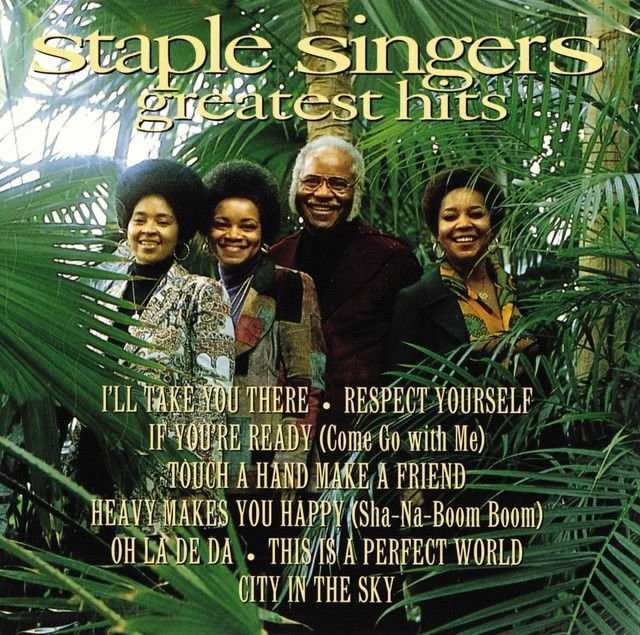
Why “I'll Take You There” Still Feels Like Salvation
The meaning of I'll Take You There The Staple Singers becomes clear almost as soon as the song starts: it offers a vision of escape, comfort, and truth. The words are simple, but the feeling is huge. The Staple Singers do not describe a complicated story. Instead, they build a promise: there is a better place than this one, and they can guide listeners toward it.
"I'll Take You There" - The Staple Singers
I know a place
Uh, ain't nobody cryin'
Loading lyrics...
Unable to load lyrics
We're unable to display the lyrics at this time. Please try again later.
Released in February 1972 on Be Altitude: Respect Yourself, the song was written and produced by Al Bell and became a major crossover hit, reaching No. 1 on both the Billboard Hot 100 and Billboard R&B chart. It was also recorded with the Muscle Shoals players, whose groove helped define the track's sound and impact. Those facts help explain why the song landed so powerfully in American culture.
A Better Place, Named Only by Feeling
At its core, the song paints a world without pain or deception. Early lines describe a place where ain't nobody cryin'
and ain't nobody worried
. That language is direct and easy to grasp, which is part of the song's power.
The song never fully explains where this place is. That matters. Because it stays open, listeners can hear it as Heaven, inner peace, freedom from injustice, or all three at once.
Interpretation: The song works best as a spiritual invitation with social meaning. It sounds like gospel, but it also speaks to life on Earth. In 1972, with civil rights struggles still shaping public life, a line like lyin' to the races
gave the dream of a better place a clear moral edge.

Watch the official I'll Take You There
music video
Gospel Roots, Pop Reach
The Staple Singers came from deep gospel roots before moving into soul and message-driven popular music. Mavis Staples later said that after hearing Dr. Martin Luther King Jr. preach, they felt that if he could preach the message, they could sing it. That background is essential to the song's meaning.
Even though the track became a pop smash, it still behaves like a gospel performance. The lead voice calls, the group responds, and the whole song feels communal instead of private. They are not singing only about one person's rescue. They are inviting everyone in.
That is why the repeated title phrase feels bigger than a hook. I'll take you there
sounds like comfort, leadership, and testimony all at once.
The Hook Is a Promise, Not Just a Chorus
Many songs use repetition to make a chorus memorable. This one uses repetition to make the promise believable. Every return to the title line feels like reassurance.
The song's structure is also unusual. It says very little in a literal sense, yet it keeps opening emotionally. Mavis Staples stretches the words, calls for help, and guides the band in real time. According to her account of the session, many of those moments were spontaneous, including her band calls such as play your piano now
. That looseness makes the invitation feel alive rather than scripted.
Interpretation: The chorus matters because it turns faith into motion. The song is not just imagining a better place. It is trying to carry the listener there through sound.
How the Groove Carries the Message
A big reason the record feels so convincing is the arrangement. The famous bass-driven opening, the steady drums, and the warm keyboard pulse create a groove that is both relaxed and insistent. The song is famously built on just two chords, which gives it a hypnotic quality.
That musical simplicity is not a weakness. It helps the message sink in. Instead of pulling attention toward complex changes, the track locks into a calm, repeating foundation. That makes the promise of relief feel stable.
Critics have often linked the track to the Muscle Shoals sound, and some have noted the reggae influence in the rhythm and intro. The result is a song that feels grounded in gospel but moves with the ease of soul and funk. It does not push listeners with force. It draws them in.
A Song About Heaven—or About Justice?
There are at least two strong ways to hear this song.
Reading One: A spiritual destination
The most direct reading is that the singer is talking about Heaven. The song describes a place free from sorrow and fear, and the group's gospel background strongly supports that idea.
Reading Two: A social vision
Just as important, the song can be heard as a dream of a more honest and just world. The mention of false faces and racial lies points toward the real failures of society. In that reading, the singer is offering not only religious hope but moral direction.
These two readings do not cancel each other out. They strengthen each other. The song's genius is that it never has to choose.
Why It Still Lasts
The record spent 15 weeks on the charts, sold in the millions in 1972, and later entered the Grammy Hall of Fame. Its afterlife in covers, samples, films, and ads shows how flexible the song is. People keep returning to it because the message is timeless: the world is painful, but another way is possible.
The meaning of I'll Take You There The Staple Singers endures because they make hope sound shared, musical, and close at hand. They do not argue for belief. They embody it.
Final takeaway
The song means more than escape. It offers a vision of healing built from gospel faith, Black musical tradition, and a deep hunger for truth. Its exact destination stays open, and that openness is part of why it still reaches people.
Disclaimer: This interpretation separates documented facts about the recording and release from reasonable readings of the lyrics and performance. As with many great songs, listeners may hear more than one valid meaning.







