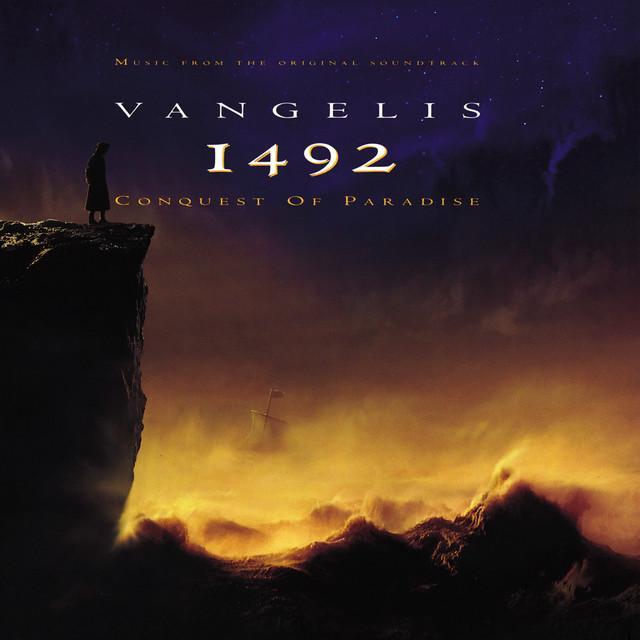
Why 'Conquest of Paradise' Feels So Eternal
The meaning of Conquest of Paradise Vangelis starts with a contradiction. The title promises beauty, wonder, and arrival. But the word “conquest” also brings power, control, and loss. That tension is why the piece still feels so strong more than three decades later.
"Conquest of Paradise" - Vangelis
Mm mm mm, mm mm mm
Mm mm mm mm, mm mm mm mm mm
Loading lyrics...
Unable to load lyrics
We're unable to display the lyrics at this time. Please try again later.
Vangelis wrote the song for Ridley Scott’s 1992 film 1492: Conquest of Paradise. It was released as the lead single from the soundtrack album in October 1992 and became a major European hit, especially in Germany, the Netherlands, and Switzerland, according to chart histories summarized by Wikipedia.
A Song About Wonder With a Shadow Over It
At its core, the track sounds like a hymn to human ambition. The choir rises, the rhythm pushes forward, and the melody keeps reaching upward. Even without a clear literal text, the song suggests a journey toward something larger than ordinary life.
Interpretation: That journey is not purely heroic. The title implies that paradise is not simply found; it is claimed. This changes the emotional color of the music. What first sounds triumphant can also sound uneasy, as if glory and damage are happening at the same time.
That double meaning fits the film connection. The movie centers on Christopher Columbus and the European encounter with the Americas. So the song can be heard as expressing both the thrill of discovery and the moral weight of empire.
Watch the official Conquest of Paradise
music video
Why the Lyrics Feel Ancient and Unfixed
One reason listeners keep asking about this song is the vocal text. The words are commonly described as pseudo-Latin rather than standard Latin, as noted in summaries of the track’s lyrics and credits at Wikipedia.
That matters because the song does not tell a plot in plain language. Instead, phrases like In noreni per ipe
, In noreni cora
, and Ne domina
work more like sound-symbols than direct statements. They create a sacred, old-world feeling without locking the listener into one exact translation.
Interpretation: This gives the piece its universal power. Instead of saying one thing clearly, it opens space for listeners to project ideas onto it: faith, voyage, destiny, mourning, or triumph.
There is also a brief variation in the text, including In romine tirmeno
and Imagine pro meno
. Even these lines feel more ceremonial than narrative. They deepen the mystery rather than explain it.
The Real Story Is in the Sound
If the words are intentionally slippery, the production carries the true emotional message. Vangelis was known for blending electronic textures with classical grandeur, and this track is a prime example. The recording features the English Chamber Choir, with Guy Protheroe credited as conductor, while Vangelis composed and arranged the piece and Frederick Rousseau is credited as producer in the single’s release details gathered at Wikipedia.
How Vangelis Builds Awe
The song’s power comes from a few simple moves:
- a slow, processional beat that feels like marching into history
- a choir that suggests ritual, prayer, or public ceremony
- synthesizers that make the piece feel modern and mythic at once
- repeated harmonic motion that creates inevitability
Research also notes that the chord progression draws on La Follia, a famous European musical pattern with deep historical roots. That link helps explain why the track feels old and monumental even though it is built with modern studio tools.
Interpretation: The music itself acts out conquest. It advances steadily, grows larger, and fills the sonic space until it feels unstoppable. At the same time, the choir keeps the sound from becoming merely military. It adds sorrow and reverence.
Why It Escaped the Movie
Many soundtrack themes stay tied to their film. This one did not. It became a cultural object of its own. It was used by German boxer Henry Maske as entrance music, and over time it spread to sports events, political rallies, ceremonies, and television uses in multiple countries, as documented in the song’s reception history at Wikipedia.
That wide afterlife reveals something important about meaning. Listeners do not hear only Columbus or 1492 when they hear this song. They hear arrival, struggle, greatness, and ceremony. The piece is abstract enough to fit many public moments.
A Closer Reading of the Title
The title is the key to the whole work. Paradise usually suggests innocence, peace, and something untouched. Conquest suggests the opposite: force, possession, and transformation.
Interpretation: Put together, the phrase may be intentionally unstable. It asks whether paradise can remain paradise once someone tries to own it. That question gives the song its emotional depth.
This is why the music can feel inspiring and troubling at once. It does not sound ironic. It sounds sincere. But sincerity does not erase the darker edge of the idea.
In noreni per ipe
In noreni cora
Tira mine per ito
Ne domina
Even here, the effect is less about dictionary meaning and more about ritual force. The listener hears a chant of movement, command, and submission to something larger.
Final Take on the Meaning
The meaning of Conquest of Paradise Vangelis is not hidden in a literal lyric sheet. It lives in the collision between the title, the film context, and the music’s huge emotional sweep. Vangelis created a piece that can sound like a prayer, a march, a victory song, or a warning.
That is why it endures. It captures one of history’s oldest human impulses: the desire to reach a promised world, even when that desire carries danger with it.
Disclaimer: This interpretation mixes documented context with informed critical reading. Because the song uses pseudo-Latin and minimal literal storytelling, some meanings remain open to listener interpretation.







