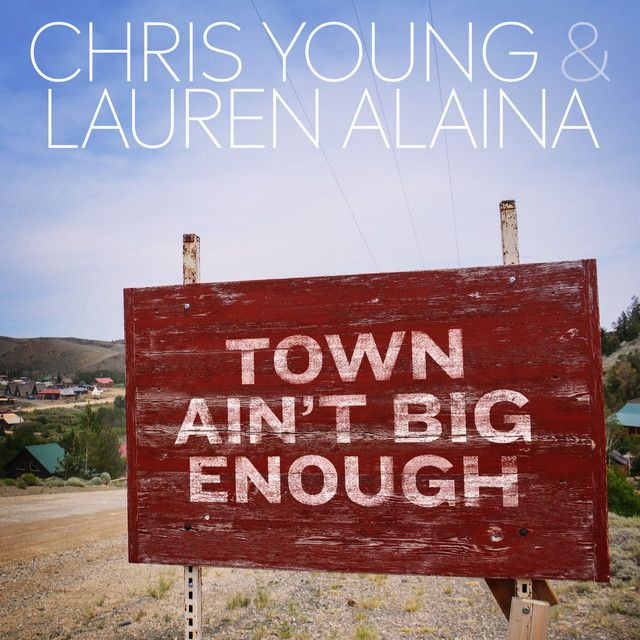
Why ‘Town Ain’t Big Enough’ Hurts So Much
The meaning of Town Ain't Big Enough Young, Lauren Alaina comes down to a simple but painful idea: after a breakup, there are some places that feel too small to heal in. This duet turns that feeling into a country story about memory, routine, and the emotional trap of running into an ex when every bar, street, and mutual friend still connects them.
"Town Ain't Big Enough" - Young, Lauren Alaina
Of bringing life to a party
When you were there with me
Loading lyrics...
Unable to load lyrics
We're unable to display the lyrics at this time. Please try again later.
Recorded by Chris Young and Lauren Alaina, the song pairs two singers who know how to sell heartache without overplaying it. Young included the track on Young Love & Saturday Nights, and the duet format matters because it makes the breakup feel shared, not one-sided. They are not arguing. They are both stuck.
A Breakup Song About Geography
At its core, the song is about how a town can become part of a relationship. In the opening, the pair remember when they were the life of the party. Those details matter because they show a couple with habits, roles, and a public identity. They were not hidden away. They belonged to the same social map.
That is why the chorus lands so hard. When they say this town ain't big enough
, they do not mean the town is physically tiny. They mean it is emotionally crowded. Every familiar place becomes a reminder, and every night out carries the risk of seeing the other person again.

Watch the official Town Ain't Big Enough
music video
The Story Moves From Fun to Fallout
The song follows a clean timeline:
- They remember being a great pair in public.
- The relationship ends, but the setting stays the same.
- Going out now means hoping not to see the ex.
- That hope fails almost every time.
One of the sharpest details is the wish to draw a line through the city
. That image suggests splitting the town into zones, almost like two countries after a war. It is a dramatic thought, but that is the point. The singers know it is unrealistic, yet it captures how badly they want space.
Why the Chorus Feels Bigger Than the Plot
The hook works because it turns one breakup into a universal feeling. Many country songs use roads, bars, and hometowns as symbols. Here, the town itself becomes the problem. The pain is not only missing a person. It is losing access to normal life.
Another key line is your friends and mine
. That phrase hints at the social mess left behind. A breakup rarely affects just two people, especially in a close community. Friend groups overlap. News travels fast. Even if both people are trying to move on, the town keeps pushing them back into each other’s orbit.
No place to run
for both of us
Those brief phrases summarize the emotional logic of the chorus. The song is not saying one person must leave forever. It is showing the trapped feeling of wanting distance and having none.
Memory Is the Real Villain
A smart part of the writing is that the ex is not presented as cruel. In fact, the remembered details are affectionate. The reference to two blue eyes
shows that attraction is still alive, which makes the breakup harder, not easier. Seeing the other person does not reopen hate. It reopens longing.
That distinction shapes the song’s meaning. This is not revenge country. It is grief country. The wound comes from the fact that the relationship once felt joyful and natural. The singers can still picture the old version of themselves, including nights of music, drinks, and being a little messy together.
Interpretation: the song suggests that some breakups hurt more when nobody became a villain. Without anger, there is less protection against nostalgia.
How Chris Young and Lauren Alaina Sell It
The duet format gives the song balance. Because both artists sing, the listener hears mirrored pain instead of competing versions of the truth. That makes the track feel mature. There is no need for dramatic blame when the real conflict is proximity.
Vocally, Young brings his usual steady baritone, while Alaina adds brightness and edge. Their tones create a push-pull effect: his voice sounds grounded and heavy, while hers sounds more exposed. Together, they make the chorus feel like a shared confession.
The production, shaped by modern country polish, supports that mood. The arrangement leans on a midtempo groove, clear percussion, and melodic guitar framing rather than big arena drama. That restraint matters. A louder, more explosive track might have turned the song into a fight. Instead, the measured sound keeps it focused on ache and repetition.
For artist context, Young has long worked in the lane of polished country heartbreak, while Alaina often brings warmth and conversational emotion. Their pairing feels natural, and Lauren Alaina fits the song’s small-town realism well.
The Best Way to Read the Ending
The repeated title line does not resolve the problem. That is important. The song ends in the same emotional trap where it began. There is no closure, just recognition. Sometimes a song’s honesty lies in refusing to fix anything.
Interpretation: another way to hear the track is as a song about identity after love. If a couple once ruled the room together, then losing the relationship also means losing the version of themselves that existed in that town. The place feels smaller because their life feels smaller.
Final Take on the Song’s Meaning
The meaning of Town Ain't Big Enough Young, Lauren Alaina is that heartbreak gets worse when the world around it stays familiar. The song captures the awkward, exhausting reality of trying to move on in a place full of memories, mutual friends, and accidental reunions.
That is what gives the duet its sting. It is not only about missing someone. It is about living in a map that still belongs to both of them.
Disclaimer: This interpretation is based on the lyrics, performance, and publicly available song context. As with any song, listeners may hear different meanings in it.








