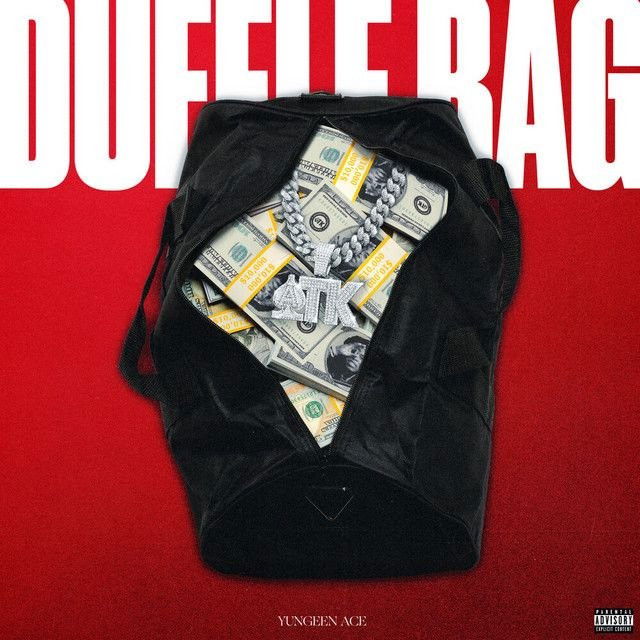
Why Yungeen Ace's "Duffle Bag" Feels Uneasy
The meaning of Duffle Bag Yungeen Ace comes down to a tense mix of victory and danger. On the surface, the song sounds like a money-and-motion anthem. Under that surface, it feels more like a report from someone who has made it but still lives in a state of alert.
"Duffle Bag" - Yungeen Ace
Huh, huh
Hey (hey)
Loading lyrics...
Unable to load lyrics
We're unable to display the lyrics at this time. Please try again later.
Yungeen Ace is a Jacksonville rapper known for turning street trauma into blunt, melodic rap. Public bios and label materials consistently frame his music around survival, loss, and local loyalty. That matters here, because "Duffle Bag" does not present wealth as peace. It presents wealth as something carried while running.
The Bag Is More Than Money
The hook centers on one hard image: quarter-million dollars
in a duffle bag. In plain terms, that is cash as proof of success. But the song quickly pairs that image with speed, escape, and pursuit, so the bag becomes more than a flex.
Interpretation: the bag symbolizes a life they earned but cannot fully enjoy. It is portable wealth, not settled wealth. A house suggests stability. A duffle bag suggests movement, urgency, and the need to leave fast.
That is why the chorus matters so much. They mention the money, then immediately shift to a car going too fast to talk and police behind them. The emotional logic is clear: success has arrived, but calm has not.
Watch the official Duffle Bag
music video
A Success Story Told at Top Speed
Much of the song plays like a chase scene. They describe foot on the gas
, a dashboard pushed to extremes, and red and blue lights
closing in. Even without a detailed plot, listeners get the story: the narrator is moving through a world where money, status, and law enforcement are always colliding.
That movement shapes the meaning of Duffle Bag Yungeen Ace. This is not reflective storytelling in a quiet room. It is high-pressure narration delivered in real time. The lyrics do not pause to moralize. They rush forward, which mirrors the mindset of someone who feels that stopping could mean losing control.
Three ideas drive the verses
- Wealth as evidence of survival. The money is a trophy, but also proof that they escaped some forms of poverty.
- Violence as constant background. Threats, retaliation, and watchfulness remain part of daily life.
- Status without emotional safety. Designer clothes and expensive watches appear, but so do drugs, enemies, and distrust.
Street Power, Local Reputation, and Fear
A big part of the track is reputation. They name their crew, hometown backing, and the idea that the city knows who holds power. That gives the song swagger, but it also reveals pressure. When an artist says the city is behind them, it sounds proud. It also sounds like something they must keep proving.
The lyrics repeatedly lean on threats and images of retaliation. Rather than treating those as random shock lines, it makes more sense to see them as part of the song's emotional world. They are building a portrait of someone who believes weakness invites danger.
Interpretation: this is why the song often sounds hard instead of joyful. Even the boasts come wrapped in warning. Lines about luxury and lines about enemies sit side by side because, in the narrator's world, they are side by side.
The Sound Makes the Message Hit Harder
Production-wise, "Duffle Bag" uses the kind of hard-edged trap framework that fits Ace well: heavy bass, sharp percussion, and a dark, repetitive loop that keeps tension high. The beat does not open into anything warm or triumphant. Instead, it stays narrow and pressurized, making the chorus feel obsessive.
That matters because the instrumental supports the song's central idea. A softer or more celebratory beat might have turned the duffle bag into a simple symbol of getting rich. Here, the production keeps it sounding like a burden as much as a prize.
Ace's vocal delivery helps too. They switch between taunting, rapping, and near-shouted emphasis. When they say Hell nah, I ain't stoppin'
, it lands as more than defiance. It sounds like a worldview.
Brag Rap With a Dark Core
There is plenty of classic flex language in the song: money, cars, jewelry, women, and expensive fashion. Those are standard rap status markers. But the song does not stay in pure brag mode for long.
Instead, Ace keeps linking success to numbness and suspicion. One telling phrase is hope time heal me
. It is short, but it opens a crack in the armor. In the middle of all the flexing, they admit that wealth has not solved inner damage.
That line changes the whole song. It suggests that the duffle bag is not just about what they have. It is about what they are carrying emotionally too: grief, anger, and unresolved pain.
The Strongest Reading of the Song
The strongest reading is that "Duffle Bag" is about survival after success. The cash, speed, and violent talk are all part of one message: making it out does not mean feeling free.
A second reading is possible too. Interpretation: the song can also be heard as self-mythmaking. By repeating the duffle bag image, Ace turns a personal flex into a symbol of legend, making themselves sound larger than life. Even then, the legend remains trapped in motion.
Final Take on the Meaning
The meaning of Duffle Bag Yungeen Ace is not just that they got rich. It is that they got rich while still feeling hunted, tested, and emotionally scarred. The song's power comes from that clash.
In the end, "Duffle Bag" turns one simple image into a full worldview: cash in hand, danger close, and no real room to relax.
Disclaimer: This interpretation is based on the lyrics, performance, and public artist context. As with any song, meaning can vary by listener.









