Why 'Heaven Can Wait' Feels So Urgent
For listeners searching for the meaning of Heaven Can Wait LSD, Sia, Diplo, Labrinth, the song lands as a bright pop anthem with a dark pulse under it. Released as the eighth track on LSD's self-titled album, it pairs a scary setup with a determined response: life may be fragile, but the singer is not ready to leave it behind. The result is both anxious and uplifting.
"Heaven Can Wait" - LSD ft. Sia, Diplo, Labrinth
I've been living like a queen in a castle
Oh, dark spirits drivin' through me like a drive-tru
Loading lyrics...
Unable to load lyrics
We're unable to display the lyrics at this time. Please try again later.
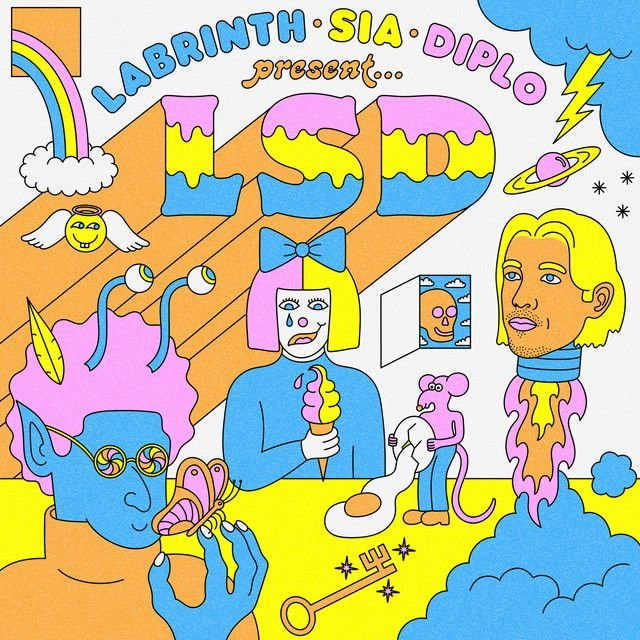
LSD — the trio of Labrinth, Sia, and Diplo — built their project around colorful, highly produced pop that mixes emotion with fantasy. According to the track listing documented by the Sia Wiki, Heaven Can Wait appears on the group's album, and a lyric video arrived in May 2019, with an Aston Shuffle remix following later that month.
The Core Message Hiding in Plain Sight
At its heart, the song is about refusing surrender. The opening verse introduces a sudden crisis when the narrator says a doctor has delivered devastating news. That one detail changes everything. From there, the song becomes a race against fear, time, and despair.
The chorus turns that panic into a statement of will. When they repeat heaven can wait
, they are not rejecting spirituality. They are insisting on life now — love now, breath now, experience now. The song frames survival as an act of choice, even when choice may be limited.
Interpretation: The title works because it sounds simple, but it holds two emotions at once. It carries terror about mortality and stubborn joy about still being alive.
Watch the official Heaven Can Wait
music video
A Story Told in Fast, Sharp Beats
The lyrics move in a clear arc:
- A medical shock changes the narrator's view of life.
- They recognize that
time is runnin' out
. - Instead of collapsing, they list what still matters: to live, love, and breathe.
- They turn to another person for comfort and rescue.
- The chorus becomes a mantra against death and hopelessness.
That structure is why the song feels so immediate. It does not wander. Every section points back to the same pressure: time is short, so feeling alive matters more than ever.
The Chorus as a Survival Mantra
The most memorable line is also the song's emotional engine. By repeating not today
and heaven can wait
, the song sounds like someone talking back to fate in real time. It is less a philosophical speech than a living-room, heartbeat-level refusal.
Before and after the hook, the singer gives the reason. They insist, in short declarations, I gotta live
and I gotta love
. Those phrases are simple on purpose. Faced with mortality, the song strips life down to its basics.
I gotta live
I gotta love
I gotta breathe
That short sequence is the song's center of gravity. It says meaning is not hidden in something grand. Meaning is in the next breath, the next feeling, the next day.
Love, Rescue, and the Need for Another Person
One of the song's most human touches is the shift from private fear to shared dependence. In the second verse, the clock imagery — tick-tock
— makes time feel mechanical and cruel. Then the narrator reaches outward, calling someone an angel and savior.
This matters because the song does not present strength as isolation. They do not survive by becoming emotionless. They survive by asking for help, affection, and emotional rewinding. The plea to put the heart on rewind suggests a wish to return to a safer moment, or at least to recover a feeling of innocence.
Interpretation: The unnamed person may be a lover, but they can also represent hope itself. The language is romantic, yet broad enough to include any figure who gives the narrator a reason to keep going.
Images That Deepen the Meaning
Several images add texture to the song's message. The line about living like royalty in a castle suggests comfort or privilege before the crisis hit. That makes the bad news feel even more destabilizing: no status can protect someone from time.
Then there is the strange image of dark spirits moving through the body. It hints at illness, inner demons, or spiraling thoughts. Because the wording is surreal, the song stays open. It can be heard literally as fear after a diagnosis, or more broadly as a battle with anxiety and depression.
That ambiguity helps explain why the song connects with different listeners. Some hear a story about physical mortality. Others hear an anthem about refusing to let despair win.
How the Production Carries the Emotion
The production is a big part of the song's meaning. Diplo and Labrinth, who are both credited as key creators within LSD, build a polished pop sound that never becomes too heavy, even with the song's dark premise. The beat keeps moving, the vocals soar, and the chorus opens up instead of closing in.
That contrast is crucial. If the track sounded bleak, the message might feel defeated. Instead, the glossy synth-pop style makes the refusal sound believable. Sia's vocal intensity brings urgency, while Labrinth's melodic sensibility helps the song swing between pressure and release. The arrangement gives listeners the same emotional motion as the lyrics: fear rises, but so does defiance.
Why the Song Still Resonates
Part of the reason this track works is that it does not over-explain itself. It gives just enough detail — a doctor, a clock, a plea, a refusal — for listeners to place their own struggles inside it. That is often where pop music is strongest.
So the meaning of Heaven Can Wait LSD, Sia, Diplo, Labrinth is best understood as a declaration of life under pressure. It is about hearing bad news, feeling time close in, and still saying there is more to do, more to feel, and more to love.
Final Take Beneath the Bright Surface
In the end, the song turns fear of death into a pop-language vow to keep living. Its hook is catchy, but its real power comes from the way it makes urgency sound hopeful.
This reading is an interpretation based on the lyrics, performance, and release context, and other listeners may hear different shades of meaning in the song.









