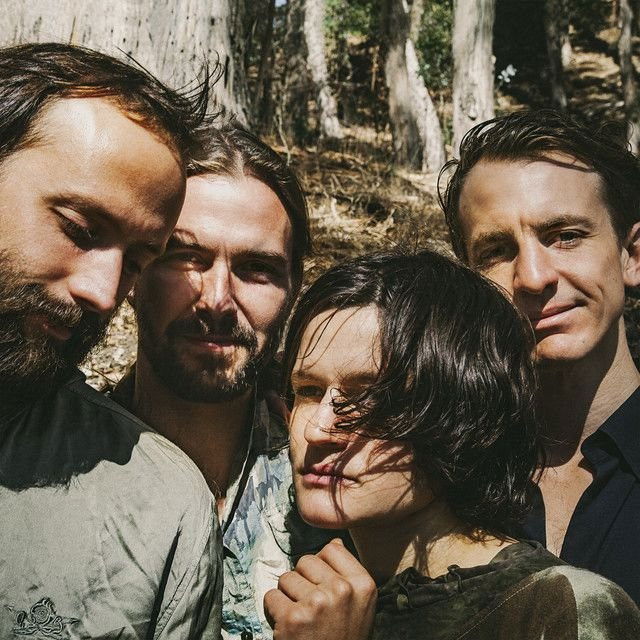
Forgotten Eyes by Big Thief
Why This Song Hurts So Quietly
The meaning of Forgotten Eyes Big Thief centers on people society learns not to see. On the surface, the song describes poverty, addiction, and the habit of looking away. At a deeper level, it asks what that habit does to everyone, not just the people who suffer most.
"Forgotten Eyes" - Big Thief
Forgotten hands are the ones which we choose
To let go of, but it is no less a bruise
Loading lyrics...
Unable to load lyrics
We're unable to display the lyrics at this time. Please try again later.
Big Thief released the song on Two Hands in 2019, and songwriter Adrianne Lenker has been open about writing with close attention to human vulnerability and lived reality. The band recorded Two Hands with producer Andrew Sarlo as a rougher, more earthbound companion to U.F.O.F., according to the group's album materials and coverage from 4AD and NPR. That context matters: this song sounds direct because its subject is direct.
Watch the official Forgotten Eyes
music video
The Core Idea: Neglect Is a Shared Wound
The song keeps returning to one central claim: abandonment is never only personal. Early lines connect lost people to a larger body, suggesting that when some are pushed aside, everyone is marked by it. The phrase forgotten eyes
is not just about being unseen. It also suggests a failure of public vision, a culture that stops noticing human need.
That is why the song pairs private pain with communal language. It speaks of a bruise on a shared arm and a tear on a shared cheek. In plain terms, the song argues that social harm spreads outward. If a community lets people disappear, the whole community becomes less whole.
Interpretation: This is why the song feels moral without sounding preachy. It does not only accuse. It says neglect damages both the abandoned person and the passerby who learns to accept abandonment.
Street-Level Detail Gives the Song Its Force
One reason the song lands so hard is its move from broad ideas to a real place. The verse about Eddie Street shows a block marked by danger and decay. The image of soiled needles
is brief, but it does a lot. It points to addiction, public neglect, and a landscape where emergency feels normal.
Then the song turns inward. Instead of keeping distance from the scene, the narrator wonders, is it they or is it I
. That question changes everything. Rather than placing “those people” on one side and the observer on the other, the song blurs the line. The hollowness may belong to the people suffering in the street, but it may also belong to the person who passes by and protects their own comfort.
That tension reaches its sharpest point in the admission that turning away also causes harm. The song does not claim that a passerby created addiction. It suggests something smaller but still serious: indifference can become part of the poison.
The Refrain Turns Protest Into Compassion
The chorus is simple and devastating. It says the hurt has no fixed path, then grounds the song in a basic truth: deserves protection
. This is not fancy writing, and that is exactly why it works. The line sounds like a moral baseline that should not need defending.
The wound has no direction
Everybody needs a home
and deserves protection
This is the article's only multi-line quote because it contains the song's clearest statement of purpose. The idea is bigger than housing policy alone, though housing is part of it. Home here also means safety, recognition, and a place inside the human circle.
Interpretation: By saying the wound has no direction, the song may mean pain does not stay where people try to contain it. It moves through neighborhoods, systems, and consciences.
Symbols That Keep Returning
The song's repeated words help explain its message:
- Eyes suggest witness, attention, and moral awareness.
- Hands suggest choice, especially the act of letting go.
- Tongue suggests speech, but also the failure to speak with care.
- Soil and plants place forgotten people inside a shared earth, not outside it.
The closing repetition of language of love
matters most. After scenes of damage and distance, the song ends by naming love as a language people have forgotten how to speak. That is a powerful shift. The answer to neglect is not pity from above. It is relearning human connection.
How the Sound Supports the Meaning
Musically, “Forgotten Eyes” avoids polish. Big Thief's playing feels loose, warm, and weathered, which fits a song about exposed lives. Lenker's vocal delivery is steady rather than explosive, and that restraint matters. They do not oversell the emotion; they let the details carry it.
The arrangement on Two Hands often favors live-feeling performances, dry textures, and a close mic sound, as noted in album coverage from Pitchfork and Rolling Stone. In this track, that approach makes the song feel like a witness statement. The guitars do not beautify the scene too much. They leave space for discomfort.
A Social Song, Not a Slogan
It would be easy to call this a protest song, but that label is too narrow. Yes, it criticizes social neglect. But it also studies conscience. The real drama is not only on the street. It is inside the observer who sees suffering and must decide what kind of person they will be.
That is what makes the meaning of Forgotten Eyes Big Thief last beyond one place or year. The song asks a hard question: what happens when a society gets used to forgetting? Their answer is that forgetting is never clean, never neutral, and never finished.
Final Take
In the end, “Forgotten Eyes” is about more than homelessness or addiction, though both are plainly present. It is about the spiritual cost of looking away and the fragile hope that people can recover a lost language of love
.
That is the song's quiet power. They turn public suffering into a shared moral mirror.
Disclaimer: This interpretation is based on the lyrics, recorded performance, and publicly available context. Like many Big Thief songs, it remains open to more than one valid reading.








