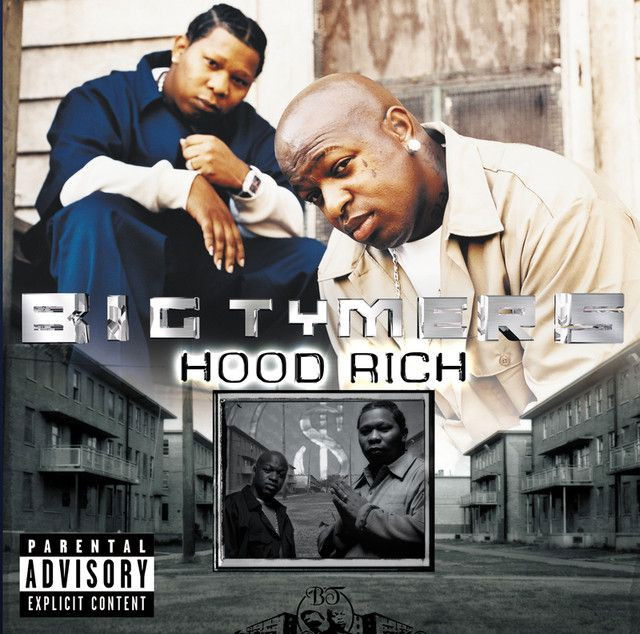
Why 'Pimpin'' by Big Tymers Is All About Image
The Fast Meaning Behind the Flex
The meaning of Pimpin' Big Tymers starts with performance. The song is not subtle, and it does not try to be. Instead, Big Tymers build a loud, exaggerated world where wealth, style, cars, and control become the proof of status. Their verses turn swagger into a full identity.
"Pimpin'" - Big Tymers
[Man]Pimpin is a alive, these niggas just jive
[Man]I've been stackin and mackin since '75
Loading lyrics...
Unable to load lyrics
We're unable to display the lyrics at this time. Please try again later.
Factually, Big Tymers were the duo of Birdman and Mannie Fresh, key figures in the early Cash Money rise. Their music helped define the label's glossy Southern rap sound in the late 1990s and early 2000s, especially through Mannie Fresh's production style and Birdman's luxury-heavy persona.
In this song, the central message is not romance or introspection. It is dominance through display. The repeated claim pimpin is alive
sets the thesis: they present themselves as survivors and masters of an old-school code of hustling, charm, and public image.
Watch the official Pimpin'
music video
A Cash Money World of Power and Possession
To understand the meaning of Pimpin' Big Tymers, it helps to see how Cash Money rap often worked at that time. Many songs from the label turned success into spectacle. Expensive cars, jewelry, and designer details were not side notes; they were the point.
Here, Birdman and Mannie Fresh treat luxury as language. A Benz, a Bentley, a Lexus coupe, exotic interiors, and flashy rims all function like symbols of rank. When the hook mentions a Benz and women calling out, the song suggests that status brings attention automatically.
Interpretation: The song is less about literal "pimping" as a real-life narrative than about a larger posture of command. In rap slang, that posture can mean control, confidence, and the ability to shape how others see them. That does not make the song morally neutral, but it does explain why so much of it sounds like theater.
How the Verses Build the Persona
Birdman's verse: wealth as proof
Birdman's section is a list of possessions and movement. He piles up images of custom cars, loud pipes, and expensive materials. He also frames himself as a born hustler
, which ties money to identity rather than luck.
That matters because the verse keeps arguing the same point in different ways: if they can spend big, upgrade constantly, and move through the city with ease, then they have won. The bragging is the story.
Mannie Fresh's verse: shock and comedy
Mannie Fresh brings more humor and wild exaggeration. He spells out his name, boasts, and pushes the song toward cartoonish excess. One of his lines about school-age success is clearly not meant as realism. It is part of rap's long tradition of outrageous self-mythology.
Interpretation: Mannie Fresh turns the song into a caricature of masculine power. That makes the track feel both entertaining and intentionally overblown. Even when the content is crude, the performance suggests they know they are building a larger-than-life character.
The Hook Turns Bragging Into a Worldview
The hook is what makes the song stick. It repeats the idea that others are fake while they are the real thing. The line about stackin and mackin
gives their image a long history, as if this lifestyle has been natural to them for decades.
When I come through in the Benz
thats my daddy daddy
In plain terms, the chorus says public admiration follows visible success. The car is not just transportation. It is a moving billboard for identity.
Interpretation: The hook also reveals insecurity under the confidence. They keep repeating authenticity claims because image-based power always needs witnesses. If nobody sees the flex, the flex loses value.
Sound, Production, and Why the Beat Matters
A big part of the meaning of Pimpin' Big Tymers comes from its sound. Mannie Fresh's production style often used bouncy drums, bright synth tones, and uncluttered space, giving Southern rap a parade-like energy. That kind of beat does not invite sadness. It invites strutting.
The production here helps the lyrics feel bigger than life. The rhythm moves with a swaggering bounce, and the vocal delivery is blunt rather than reflective. Birdman sounds heavy and declarative. Mannie Fresh sounds playful and animated. Together, they create a world where boasting feels natural.
This is important because a different beat could have exposed the uglier side of the lyrics more sharply. Instead, the lively production wraps the song in celebration. That does not erase the misogyny in parts of the track, but it does explain why listeners often receive it first as a club-ready anthem of excess.
The Harder Part: Gender and Control
Any honest reading has to say this clearly: the song talks about women in objectifying ways. They are often presented as rewards, accessories, or proof of male success. That is common in some rap of the era, but it is still a real part of the song's meaning.
At the same time, the track is so focused on male image-making that women often feel less like characters and more like mirrors. They reflect the men's status back to them. In that sense, the song is really about male ego performing for an audience.
Interpretation: The most revealing line may not be the most offensive one. It is the one that keeps returning to external signs of worth. Cars, clothes, attention, and the claim to be hood rich
all suggest that selfhood here depends on display.
Why It Still Stands Out
"Pimpin'" lasts because it captures a specific rap era with total confidence. It is flashy, funny, crude, and sonically sharp. It also shows how Big Tymers helped turn Southern luxury rap into a mainstream force.
For many listeners, the meaning of Pimpin' Big Tymers is simple: a celebration of swagger. For others, it is also a study in how power gets staged through money, movement, and spectacle. Both readings can be true at once.
Final Take on the Song's Message
At its core, "Pimpin'" is about image as power. Big Tymers present wealth and control as things that must be seen, repeated, and performed. The song's energy comes from that confidence, while its limitations come from how narrowly it defines success.
That makes it memorable even now: not because it is deep in a confessional way, but because it is revealing in what it celebrates.
Disclaimer: This article offers informed interpretation based on the song, artist context, and production style. Meanings can vary by listener.







