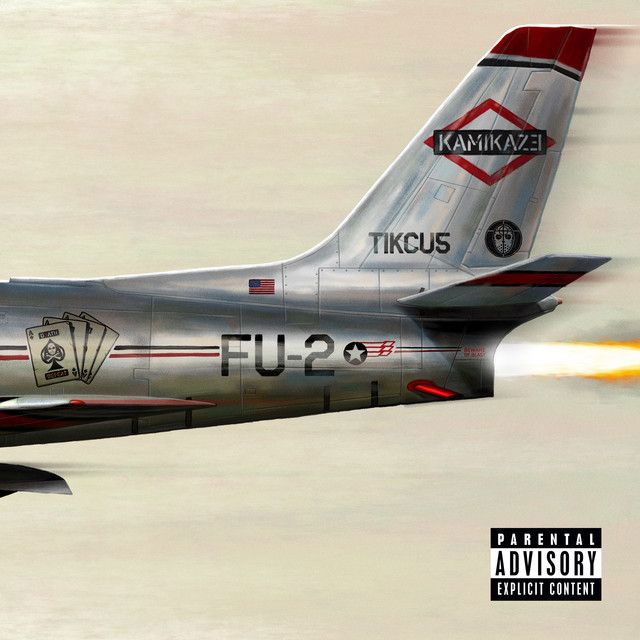
Stepping Stone by Eminem
The meaning of Stepping Stone Eminem comes down to grief, guilt, and closure. On one level, the song is a memoir about D12: their rise, their chemistry, and their long decline. On another, it is Eminem admitting that his fame changed the balance of the group, even if that was never his goal.
"Stepping Stone" - Eminem
(Yeah, yeah, yeah, yeah)
It's 2002, everything was totally new
Loading lyrics...
Unable to load lyrics
We're unable to display the lyrics at this time. Please try again later.
Released on Kamikaze in 2018, the track is widely understood as his clearest public statement that D12 was over after years of inactivity. Research sources note that the song addresses the group's fallout and the loss of Proof, whose 2006 death left a hole D12 never really filled. Critics also noticed its reflective tone, with The Guardian calling it a thoughtful look at the group's collapse.
The heart of the song is remorse
At its core, this is not a victory lap. It is a confession. Eminem looks back to the early 2000s, when D12 felt unstoppable, then traces how success, solo ambitions, and personal tragedy slowly pulled the members apart.
When he says stepping stones
, he is naming the fear that his friends may have felt used as part of his larger career story. He does not frame that as a simple fact. Instead, he presents it as guilt he has carried for years.
Interpretation: The song works because it does not try to fully clear his name. They hear someone trying to tell the truth while also knowing that truth may still hurt.

Watch the official Stepping Stone
music video
Proof is the emotional breaking point
The song's most important idea is that Proof's death changed everything. Eminem plainly ties the group's creative spark to Proof's presence, then says that once he was gone, the group never truly recovered.
That is why lines about success and friendship feel heavy rather than nostalgic. He is not just saying the business failed. He is saying the spirit behind it failed too.
One of the shortest, strongest phrases is the group
in the context of Proof's death. The point is simple: D12 may have remained a name, but its emotional center was gone.
A timeline of rise, drift, and ending
First came fame
The opening verse revisits 2002, when D12 was commercially hot and felt, in his telling, almost untouchable. The memory is energetic, but it is also framed with hindsight. They hear youth, ego, and momentum all at once.
Then came fragmentation
After that, the song shifts to solo plans, missed opportunities, and emotional silence. Eminem suggests he wanted the group members to become strong enough to stand on their own, but he also admits he was not able to guide everyone through the hard years.
A phrase like wash away my sins
shows how personal this feels. He is not debating strategy. He is asking for moral and emotional cleansing.
Finally comes closure
Near the end, he separates friendship from the group itself. The message is painful but mature: relationships may remain, but the band cannot keep pretending it still has the same life.
That is where the song becomes more than memory. It becomes an official goodbye.
Why the chorus matters so much
The hook uses river and cleansing imagery to frame regret. He wants to leave behind old damage, make amends, and avoid falling back into old patterns.
I'ma wash away my sins
I'ma rinse away this dirt
Those lines are brief, but they anchor the whole song. Instead of bragging, he uses spiritual language: sin, grace, dirt, amends. That gives the track a confessional tone, as if he is standing in front of the past and trying to answer for it.
Interpretation: The river is less about religion itself and more about emotional cleaning. They can hear someone trying to scrub away shame that success did not erase.
The sound matches the apology
Production matters here. Sources credit Eminem and Luis Resto as producers, with Luis Resto also contributing keyboards. The instrumental is subdued, steady, and mournful rather than explosive.
That choice is important on Kamikaze, an album known for sharper, more aggressive energy. In that setting, "Stepping Stone" stands apart. The beat leaves room for storytelling, and the sung refrain softens the edges of his delivery.
There is also a worn, reflective feeling in the mix. Instead of building toward triumph, the track circles around memory. That makes the listener focus on the words, especially when he sounds tired, regretful, or unsure.
The title carries the whole argument
The meaning of Stepping Stone Eminem is really contained in the title. A stepping stone helps someone cross to somewhere else, but it is also something stepped on. That double meaning is what hurts.
Eminem is asking whether his path to solo greatness came at emotional cost to the people closest to him. He does not fully answer the question. He leaves it open, which makes the song feel honest.
Another key phrase is D12 is over
. It is blunt, but not cruel. He frames the ending as overdue truth rather than betrayal.
Final takeaway
"Stepping Stone" is one of Eminem's most human songs because it trades battle rap posture for accountability. It remembers D12's glory days, mourns Proof, and admits that silence and success both widened the distance between friends.
For many listeners, that is why the track lasts: it is not just about a rap group ending. It is about what happens when loyalty, fame, grief, and time stop moving at the same speed.
Disclaimer: This article offers a good-faith interpretation of the song based on the lyrics, release context, and reported background. Meaning can remain open to listeners' own experiences.








