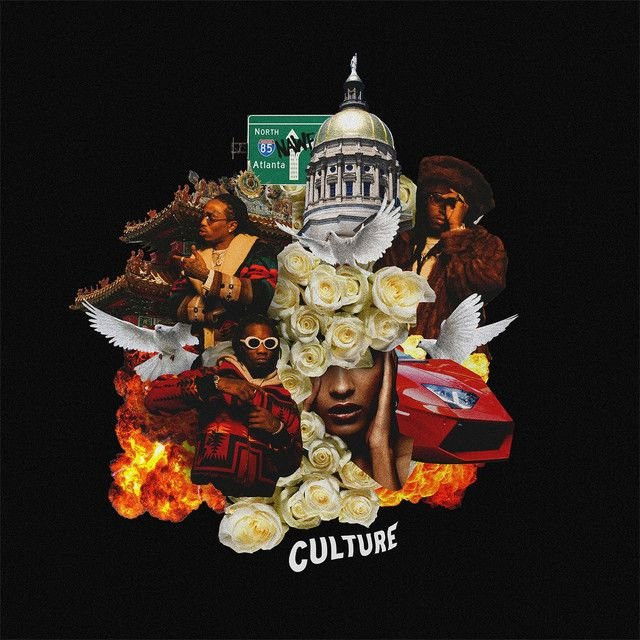
Why Migos Made 'Big On Big' a Status Test
The meaning of Big On Big Migos starts with a simple idea: not all bragging carries the same weight. The song turns that point into a challenge. If two people both claim success, who actually has more scale, more proof, and more staying power?
"Big On Big" - Migos
Big on big
Big on big
Loading lyrics...
Unable to load lyrics
We're unable to display the lyrics at this time. Please try again later.
Released during the Culture II era, the track sits inside the trio’s larger run as one of the defining acts of 2010s trap. Migos—Quavo, Offset, and Takeoff—helped push North Atlanta rap into the mainstream, with a style built on triplet flows, ad-libs, and sharp luxury talk, as noted by Billboard via Migos reference coverage. On this song, they do not just celebrate wealth. They rank it.
A Hook Built Like a Challenge
The chorus is the whole thesis. When they repeat big on big
and ask How you gon' big on big?
, they are not looking for an answer. They are setting terms.
The song says that if both sides have money, cars, or status, the comparison still matters. Their flex is framed as larger, rarer, and harder earned. That makes the hook feel less like celebration and more like a public test of authenticity.
Interpretation: the repeated question works almost like a courtroom cross-examination. Every line tries to prove that rivals are exaggerating, while Migos are presenting receipts.
Watch the official Big On Big
music video
More Than Money: It Is About Scale
A key part of the meaning of Big On Big Migos is scale. The lyrics keep moving from one comparison to another: paper, land, vehicles, products, and partners. Even when the details are flashy, the pattern is what matters.
They contrast ordinary success with oversized success. One of the clearest examples is the move from neighbors
to acres
. That image says a lot in very few words. This is not just about having a nice place. It is about owning enough space that normal markers of success now look small.
The same thing happens with cars, cash, and jewelry. Each comparison suggests that smaller wins do not impress them because they already operate beyond that level. In plain terms, the song argues that imitation success cannot compete with established power.
Verses That Attack Fake Flexing
The verses go harder than the hook. They accuse unnamed rivals of lying about what they own, what they sell, and how independent they really are. A short phrase like that ain't real
captures the mood. The point is not subtle: the group sees a gap between public image and private truth.
That matters because Migos built much of their music on hustle mythology and visible advancement. Since their 2008 formation in Lawrenceville, Georgia, they rose from mixtapes to major commercial success, with Culture II debuting at No. 1 on the Billboard 200, according to public chart reporting summarized here. In that context, the song sounds like veterans protecting their place.
Interpretation: they are saying that fake wealth is easy to perform, but hard to sustain. Real status shows up in ownership, consistency, and memory—who was present when times were hard, and who only arrived once success was visible.
The Sound Makes the Boast Hit Harder
The beat matters a lot here. The track is produced by Zaytoven, whose piano-led trap style helped shape key moments in Atlanta rap and also powered Migos’ early breakout song Versace
, as documented in Migos career histories. On “Big On Big,” the production is lean and springy rather than overloaded.
That choice helps the message. The instrumental leaves space for the trio to punch each comparison clearly. Instead of sounding crowded, the song feels like a sequence of direct shots. The repetition of the hook lands like a chant, and the pauses around it make the taunt feel bigger.
Three voices, one message
Migos often worked best when each member sharpened a shared theme from a slightly different angle. Here, that group chemistry matters.
We the biggest shit poppin'
Can't go big on big
Even in this brief moment, the idea is unified: they are not merely claiming popularity; they are claiming a ceiling others cannot break through. The delivery makes that argument feel communal, not solo. It is a team flex.
A Trap Song About Proof
On the surface, the song is packed with excess. There are references to vehicles, diamonds, property, and expensive habits. But beneath the flexing is a repeated standard: proof beats talk.
That is why lines about ownership stand out more than random luxury drops. When they mention property and assets, the song shifts from showing off to establishing permanence. Anyone can rent an image. Ownership suggests durability.
This idea also fits Migos’ larger role in trap music. They were central to a wave that turned local Atlanta sounds into pop-scale rap language, earning praise for their impact on culture and style, as noted in widely cited coverage of the group. “Big On Big” uses that confidence to draw a boundary between trend-followers and trendsetters.
The Sharpest Reading of the Song
The clearest reading is that “Big On Big” is a hierarchy song. It is about who gets to boast, and who has truly earned that right.
Interpretation: there is also a defensive edge here. The trio sound like artists who know they are being copied, challenged, and measured by newer acts. So they answer with a track that turns comparison into a game only they can win.
That is why the song keeps returning to the same question. It is not just catchy. It is the song’s whole worldview.
Final Take on the Meaning
The meaning of Big On Big Migos is not complicated, but it is precise. Migos use the song to say that success is not just about having something; it is about having more, having proof, and having history behind it.
Their hook turns that belief into a slogan, while Zaytoven’s beat gives it a hard, confident frame. The result is a trap anthem about status, but also about scale, memory, and legitimacy.
Disclaimer: This interpretation is based on the lyrics, production, and public career context. As with most songs, listeners may hear different meanings in the same lines.








